
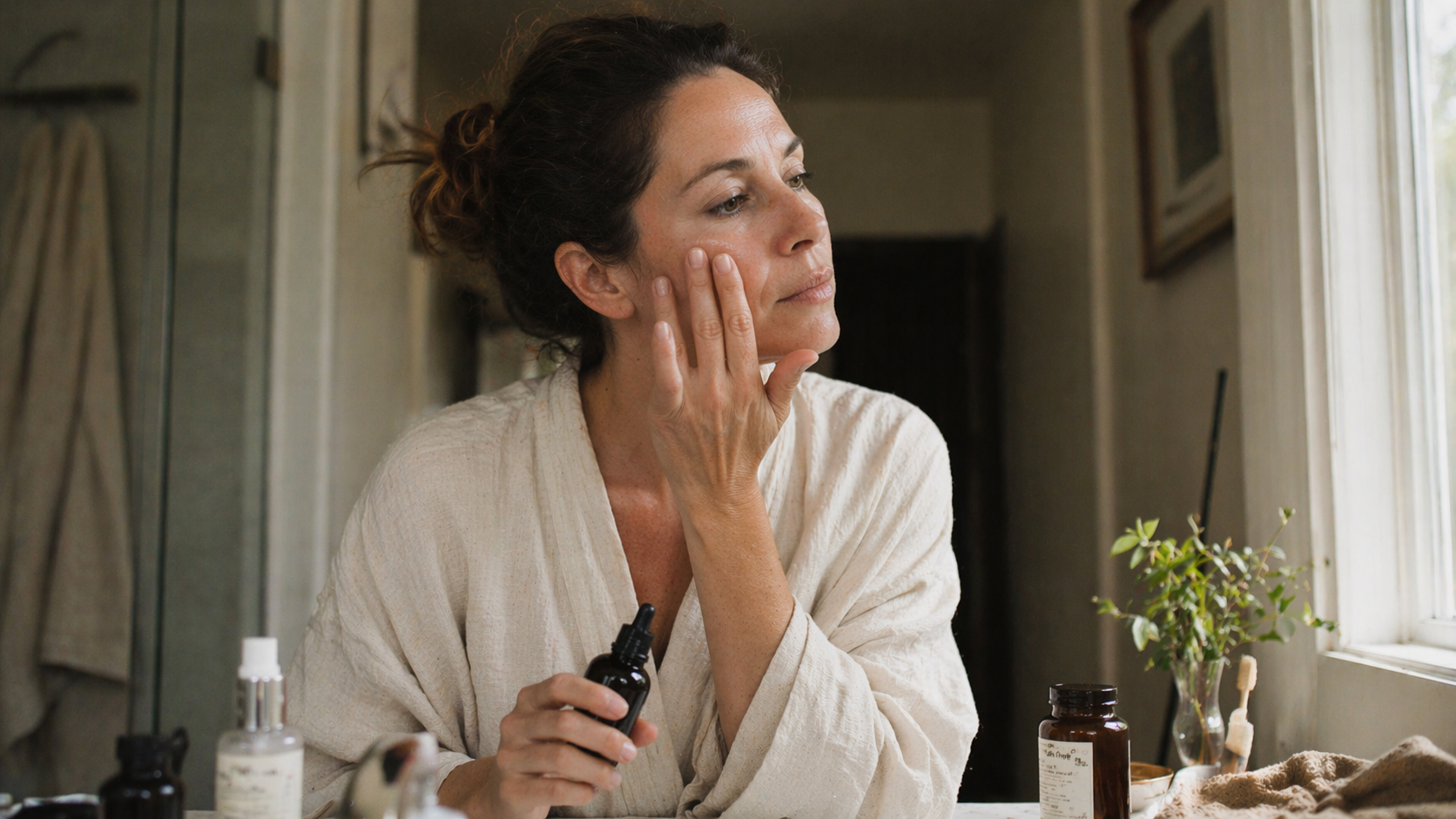
Skincare for Women Over 40: The Routine That Actually Works
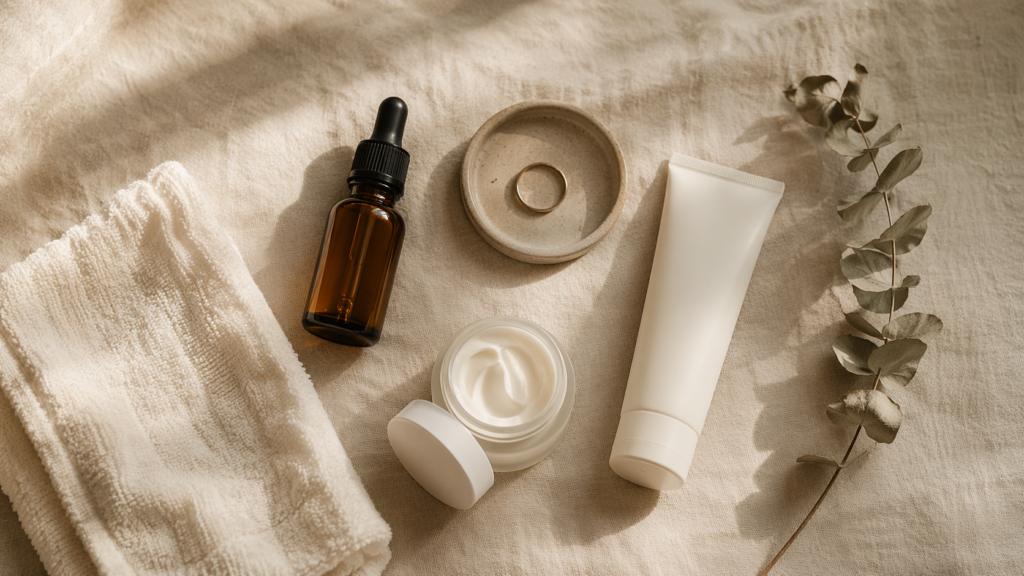
You know the mirror moment. Maybe it happened on a Tuesday, under the unforgiving light of your bathroom at 7:14 a.m. Your foundation had settled into a fine line near your mouth that definitely wasn’t there in February. Or perhaps it was the morning your skin looked tired despite nine hours of sleep and a chamomile tea before bed. Possibly the one where you applied your usual moisturizer and your skin just sort of… shrugged.
Whatever it was, something shifted. And now you’re here, at 11 p.m., deep in a rabbit hole about skincare for women over 40. You’re trying to figure out why your skin has gone rogue and what to actually do about it.
Good news: you’re not imagining it, and you’re not behind. Besides, you don’t need a twelve-step routine or a $380 serum to turn things around. What you need is a routine that respects what your skin is actually doing right now, not what it was doing at 29.
So let’s get into it.
What’s Actually Happening to Your Skin After 40
Your skin in your 40s is not broken. Basically, it’s just running a different program.
Estrogen starts its slow dip in your mid-30s. Then it accelerates through perimenopause, which can begin as early as your late 30s and run well into your 50s. Meanwhile, that estrogen was doing a lot of quiet heavy lifting. It kept your skin plump, supported collagen, regulated oil production, and even helped your barrier stay intact. Naturally, when it pulls back, you notice.
Collagen loss runs at roughly 1% per year after 25. So by 40, you’re working with meaningfully less. Cell turnover also slows down. In your 20s, it refreshed every 28 days. Now it takes closer to 45 or 50. That’s why mature skin can look dull even when you’re objectively healthy.
Meanwhile, the skin barrier gets touchier. Sebum production drops too. As a result, even lifelong oily types often find themselves in dry territory for the first time. Sunspots that were lurking under the surface for two decades suddenly want to be seen.
Nothing is wrong with you. Perimenopausal skin is just telling you it needs a different conversation.
The Perimenopause Conversation Nobody Had With Us
Here’s what I find wild. I’m in my 40s, I’ve been writing about skin for over a decade, and nobody sat me down and had the conversation. Not my GP, not my OB, not my dermatologist at my annual skin check. Nobody said, “Here’s what perimenopause is going to do to your face.”
Instead, we had to wait for Naomi Watts to write a book. Then for Drew Barrymore to talk about night sweats on daytime TV. Eventually for Halle Berry to walk up to a microphone on Capitol Hill. And for Dr. Mary Claire Haver’s Instagram to become a public health campaign in its own right.
Finally, the Menopause Society’s recent position statement acknowledged what The Menopause Society has been pushing for. Skin changes are a legitimate, quality-of-life-affecting symptom of hormonal transition, not cosmetic vanity.
What this means in real life: if you’re suddenly dealing with dryness, new jawline acne, or increased sensitivity in your 40s, hormones are almost certainly part of the picture. That’s true even for the general “my skin is behaving like a stranger” situation. However, that doesn’t mean you need HRT to have good skin. It does mean your skincare needs to account for the terrain, not fight it.
Your Morning Routine, Reworked for Skin in Its 40s
Mornings are for protection. That’s the whole job.
Gentle cleanse, or just water. If you did your real work the night before (we’ll get there), you don’t need to strip your skin again at 7 a.m. A splash of lukewarm water or a cream cleanser is plenty. The foaming squeaky-clean kind was fine in 2008. However, it is not your friend now.
Antioxidant serum, ideally vitamin C. This is your bodyguard against the free radicals your skin meets all day. UV, pollution, whatever that weird fluorescent light at the office is doing. Look for L-ascorbic acid at 10–15% if your skin tolerates it. Otherwise, try a gentler derivative like magnesium ascorbyl phosphate. Indeed, there’s a solid body of research in the Journal of the American Academy of Dermatology. Topical vitamin C brightens pigmentation and supports collagen when used consistently.
Hydrating layer. A hyaluronic acid serum or light essence. Put water on your face so your skin can hold onto it. Especially in Calgary in February. Or Denver, where the humidity is basically a rumor.
Moisturizer with ceramides or peptides. Ceramides patch up a barrier that’s running low on them. Meanwhile, peptides send signals to stressed-out fibroblasts to keep making collagen, please and thank you.
Sunscreen. Non-negotiable. SPF 30 minimum, broad spectrum, reapplied if you’re outside for long stretches. Honestly, I don’t care if it’s snowing in Ottawa. UV is still there, and snow reflects about 80% of it back at your face. In fact, this is the single most anti-aging thing in your entire routine, full stop.
The Evening Routine Where the Real Work Happens
Night is when your skin actually does its repair work. Also, it’s when you can layer in ingredients that would send your face into a photosensitive tailspin at noon.
First, if you wore sunscreen or makeup, double cleanse. Use an oil or balm cleanser to break down the SPF. Then follow with a gentle water-based cleanser. However, if you had a no-makeup, barely-outside kind of day, one cleanse is plenty. No need to overdo it.
This is also where retinoids live. More on those in a second.
After your actives, go in with a hydrating serum and a richer moisturizer than you use in the morning. Look for ceramides, squalane, fatty acids, maybe a little shea butter if your skin is really parched. In winter, a few drops of rosehip or marula oil on top works as a final seal. Basically, it locks everything underneath it in.
How to Start a Retinoid Without Shredding Your Face
I started prescription tretinoin at 41. Nobody warned me about the purge phase, so let me warn you. The first six weeks are unpleasant. My skin flaked in sheets. Then I broke out in spots that had been clear since my 20s. Honestly, I almost quit on week three.
Here’s the approach that worked. First, start with the lowest strength (0.025% tret, or an over-the-counter retinol around 0.3%). Use it twice a week for two weeks. Next, go to three times a week for the next two, then every other night. Also, apply a pea-sized amount to fully dry skin. Damp skin massively increases irritation. Finally, sandwich it between moisturizer layers if you’re reactive. Dermatologists call this the “buffer method,” and it works.
If your skin flakes or burns, back off. After all, this is not a pain-is-beauty situation.
It took about three months to see real change. By month six, I had fewer new breakouts than in my 30s. My texture was visibly smoother. The fine lines around my eyes had softened. That’s not miracle marketing. That’s just what tretinoin does when you give it time.
The Short List of Actives Worth Your Money
There are maybe five ingredients that genuinely earn their place in an anti-aging skincare routine. The rest is packaging.
Retinoids (retinol, retinaldehyde, tretinoin) are the most studied anti-aging ingredient in existence. They speed cell turnover, fade pigment, reduce fine lines, and help with adult acne. In fact, nothing else does this much.
Vitamin C brightens, protects against UV damage, and supports collagen. Mornings, ideally.
Peptides signal your skin to keep producing collagen. Also, they’re less irritating than retinoids, so they play well with sensitive skin. However, they’re not a retinoid replacement, just a solid sidekick.
Niacinamide is the quiet overachiever. It strengthens the skin barrier, reduces redness, helps with pigmentation, and plays nicely with basically everything else you own. A 5% niacinamide serum from Shoppers Drug Mart or the drugstore aisle at Ulta will do as much as the $90 version in the black bottle. I’m not being cute. That’s just the truth.
SPF. I know. Still saying it.
Years ago, my dermatologist told me something I think about constantly. “The most expensive ingredient in any skincare product is time. If you’re not using it consistently for three months, it doesn’t matter what’s in the bottle.” Spoiler: the $300 cream and the $22 one often contain the same active at the same percentage. The packaging is where your money goes.
The Mistakes Aging You Faster Than Time Is
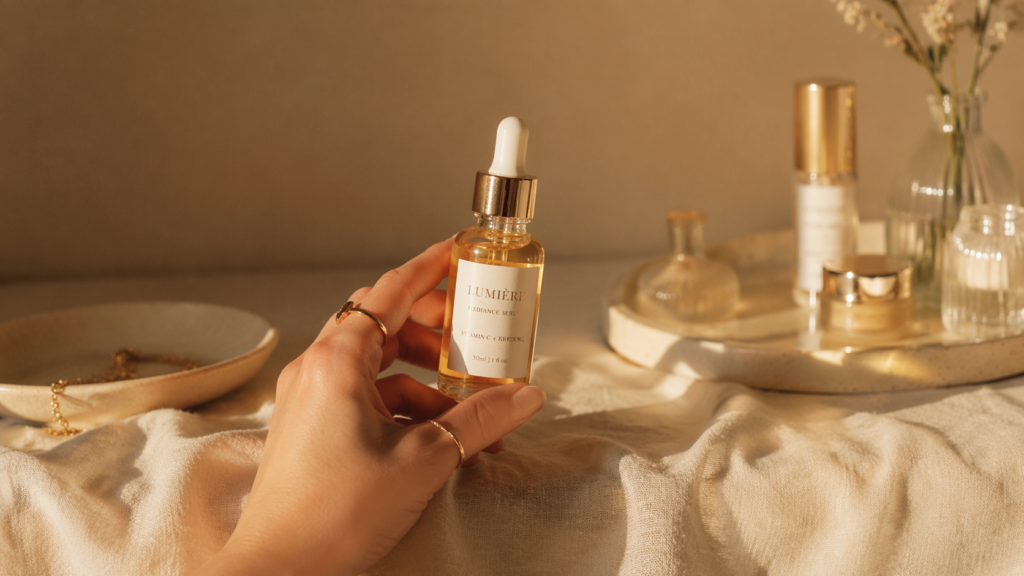
Last month, a 46-year-old client sat in my studio and said, “I’m doing everything right and my skin looks angry at me.” She was using six different actives on rotation. Two exfoliants, three serums, and a prescription retinoid layered with an AHA. So we cut her routine in half. Three weeks later, her skin had calmed down more than it had in a year.
Sometimes the problem is that you’re doing too much.
Over-exfoliating is the big one. You don’t need to exfoliate every night. Two to three times a week is plenty, and that includes retinoid nights. If your skin stings when you apply moisturizer, you’ve overdone it.
Skipping SPF from October to March. UV doesn’t clock out because it’s cold. In fact, Canadian winters are actually worse for UV reflection than most summer days.
Chasing every TikTok trend. Slugging, skin flooding, ice rolling, face taping, seventeen-step routines. Most of this is content, not skincare. Besides, the best skincare routine for your 40s responds to consistency and a short list of well-formulated products, not novelty.
The Assumptions That Cost You More
Under-moisturizing because you’re “oily.” Oily skin in your 40s is often actually dehydrated skin overproducing oil to compensate. Hydrate it, and it usually calms down.
Assuming expensive means effective. I’ve seen $400 creams that contain less active ingredient than a $29 formula from the Kirkland Signature skincare line. Yes, really. Read labels, not price tags.
Beyond the Bathroom Shelf: What Skincare for Women Over 40 Can’t Fix Alone
Your skin is an organ. It responds to how you sleep, what you eat, how much you move, how stressed you are, and, honestly, how much you drink.
Sleep is non-negotiable. Your skin does its repair work during deep sleep. Seven to nine hours is when peak collagen synthesis happens. Five hours and a green juice is not a substitute. (Apparently “just drink more water” does not, in fact, solve everything. Groundbreaking.)
Protein intake matters more than most women realize. After all, collagen is a protein. You need roughly 0.8 to 1 gram per pound of body weight to support skin, muscle, and bone. Meanwhile, most women in their 40s are chronically under-eating it. [INTERNAL LINK: how much protein women over 40 actually need]
Strength training deserves its own paragraph. Resistance training supports bone density, muscle mass, and metabolic health. All of that shows up in your skin. In fact, women who strength-train consistently tend to have better skin elasticity and thickness than cardio-only peers. Your face is downstream of your body.
The Alcohol Conversation
Nobody wants to hear this. However, alcohol is inflammatory. It also disrupts your sleep architecture (even one glass). Besides, it dehydrates you at a cellular level. You don’t have to quit. You might notice, though, that the glass of Malbec that was fine at 32 reads on your face at 44.
Stress management isn’t a bubble bath, either. Cortisol breaks down collagen. So walks without a podcast, saying no to things, therapy, actual rest. Whatever gets your nervous system out of flight mode counts.
Professional Treatments: What’s Worth It, What’s Theater
Honest takes, assuming you’re paying out of pocket (which most of us are, in both countries):
Prescription tretinoin. Roughly $40–80 for a tube that lasts months. Indeed, it’s the best dollar-per-result ratio in all of skincare. If you do one thing, do this.
Chemical peels. Light-to-medium peels run $150–400 per session. Overall, they can meaningfully improve texture and pigmentation. Good value. However, go professional-grade only, because the at-home versions are diluted for a reason.
Microneedling. $300–600 per session, typically a series of three to six. Real collagen-stimulating results when done by a trained provider. Worth it if you have texture or acne scarring concerns.
BBL or IPL for pigmentation. $400–800 per session. If sunspots are your main concern, this works well. However, it’s skin tone dependent. Talk to your provider.
Neuromodulators like Botox or Dysport. $400–800 per area. Not skincare, but a category many women in their 40s consider. Honestly, it’s a personal choice, not a health decision. Anyone who tells you otherwise is selling something.
Fillers. Tread carefully. The “done right, it’s invisible” bar is high. Meanwhile, badly done filler is deeply conspicuous. So find a provider who under-treats on purpose. American Academy of Dermatology on cosmetic procedures
What’s theater: LED masks at drugstore strength, jade rollers, collagen drinks (your stomach acid doesn’t care that it said “beauty” on the bottle), and most “anti-aging facials” at day spas.
A quick word on when to skip the serum and call the derm. New moles or moles changing in color, shape, or size. Persistent adult acne that’s cystic or scarring. Melasma that’s getting worse despite diligent SPF. Rosacea flushing into your ears and jaw. Also, any skin change that comes with other symptoms like fatigue, hair loss, or weight changes. Basically, these are medical, not skincare.
Canadian readers, I know. Dermatology wait times in most provinces are six to twelve months for non-urgent referrals. So ask your GP about an urgent referral if something genuinely worries you. Meanwhile, medical spas with trained registered nurses can sometimes bridge the gap. The Canadian Dermatology Association also has a referral tool worth bookmarking.
US readers, call your insurance first. Dermatology coverage varies wildly. A cosmetic-flavored appointment will run you $250–500 out of pocket if it’s not covered.
Your skin in your 40s is still you. It’s just in a new phase, running a new program, asking for a slightly different kind of attention.
Also, you don’t have to fight it. Nor do you have to perform gratitude for it either. The best skincare for women over 40 isn’t about chasing 25. Besides, it’s not about forcing yourself into some wellness-influencer version of “radiant aging.” It’s about showing up consistently with a short list of things that actually work. Eating enough protein. Sleeping like it’s your job. And closing the tab when you’ve read enough.
Speaking of which. It’s past 11. Go wash your face and go to bed.