Makeup Should Enhance, Not Disappear You
The Beauty Industry Taught Us to Hide
There was a time when makeup felt like an invitation — an open door to play, to glow, to become more of yourself. Somewhere along the way, it quietly turned into a disguise. Instead of asking, “What do I love about my face?” women began asking, “What should I hide?” That shift didn’t happen by accident. It was taught.
Scroll through any beauty feed and you’ll see it: the same sculpted cheekbones, the same lifted eyes, the same erased pores, the same neutralized skin tones. Trends come and go, but the underlying message stays stubbornly the same — there is one acceptable face. Makeup, which once celebrated individuality, is now often used to erase it.
When Makeup Becomes a Mask
Real beauty doesn’t come from looking like everyone else. It comes from being visibly, recognizably you. Makeup was never meant to overwrite your features. It was meant to highlight them — to bring attention to what already makes you unique.
When makeup becomes a mask, something subtle but painful happens. You start to believe that your bare face is a “before” and your made-up face is the “after.” You stop seeing your own beauty unless it has been filtered, contoured, and corrected. Confidence becomes conditional. It depends on products, not presence.
Why Your Bare Face Starts to Feel Wrong
This is why so many women feel strangely uncomfortable when they wash their face at night. Not because they dislike themselves — but because they’ve been taught that their natural face is unfinished.
But here’s the truth that rarely gets said: a face that needs to be erased to be beautiful was never the problem. The problem was the standard.
What Real Enhancement Actually Means
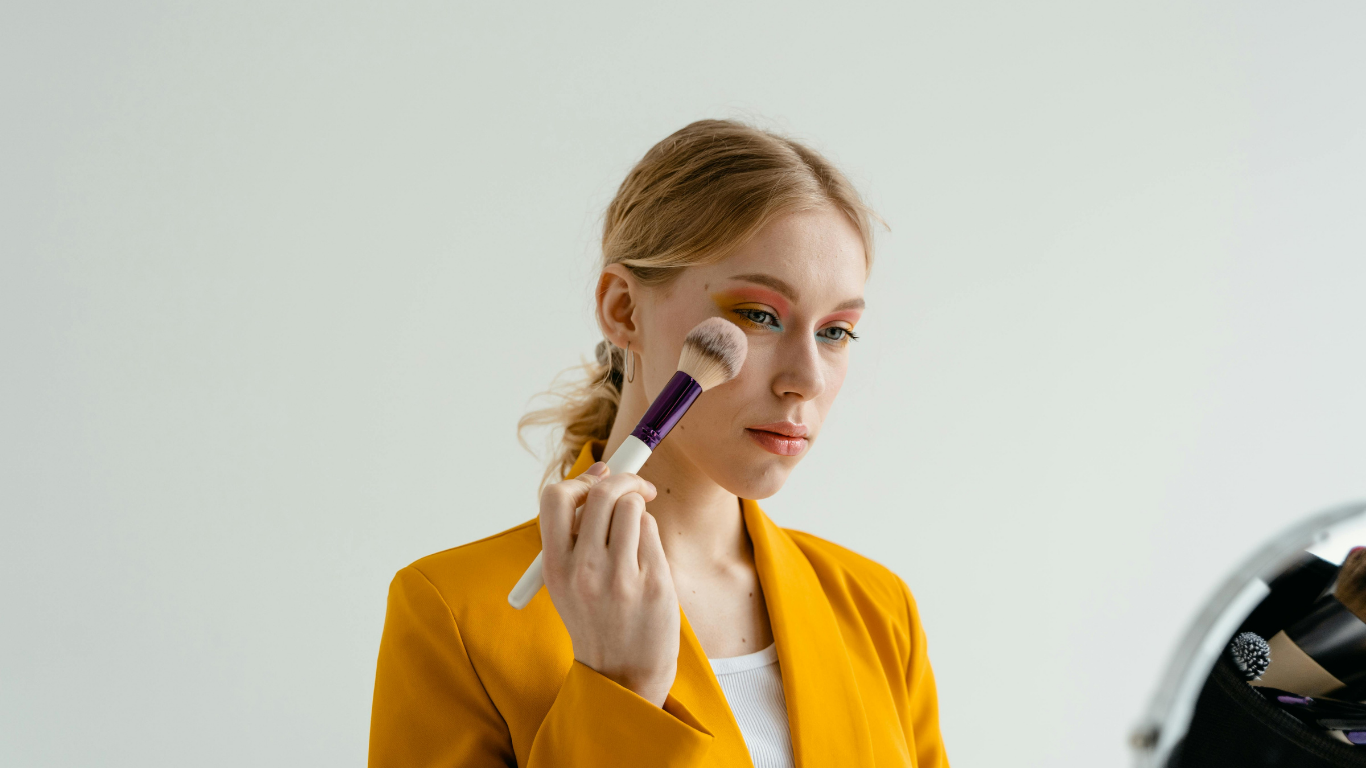
Makeup, at its best, is a conversation between you and your reflection. It doesn’t say, “You’re not enough.” It says, “Let’s turn up what’s already there.” A little color that makes your eyes feel alive. A glow that reflects how rested or happy you feel. A soft line that brings out your natural structure instead of replacing it.
The women who look the most beautiful in makeup are not the ones who wear the most of it. They are the ones who still look like themselves.
Why the Most Beautiful Women Still Look Like Themselves
You’ve seen them. Their faces feel familiar, even with lipstick and mascara. You can recognize them across a room. Their makeup doesn’t announce itself before they do. It moves with their expressions. It belongs to them.
That is what enhancement looks like.
Why Blending In Is Not the Same as Being Beautiful
Disappearing into trends is tempting. It feels safe to blend in. If you wear what everyone else wears and paint your face the way everyone else does, you can’t be judged as easily. But safety is not beauty. It’s just conformity.
Your face has a natural architecture — a way light hits your cheekbones, a curve to your lips, a shape to your eyes that no trend can replicate. When makeup respects that architecture, something magical happens: people see you before they see the makeup.
Makeup Should Translate You, Not Replace You
This is why no tutorial can teach true beauty. You don’t need to learn how to contour your face into someone else’s. You need to learn how to notice your own.
The softest kind of beauty comes from recognition. When you recognize your own face. When you stop trying to fix it and start trying to understand it.
Makeup should never feel like erasure. It should feel like translation — turning your natural features into something slightly louder, slightly brighter, slightly more intentional.
You Don’t Need a New Face
You don’t need a new face.
You need a clearer version of your own.
And when makeup does that — when it enhances instead of replaces — it doesn’t just make you look beautiful.
It makes you feel seen.